

Battery Energy Storage Systems
Guided by our three-pillar approach of Planet, People and Progress, Solarvest is on an ongoing journey toward a greener and more resilient future. We implement comprehensive measures that drive tangible progress, underscoring our continued commitment to sustainability as a key player in the clean energy sector.
What is Battery Energy Storage?
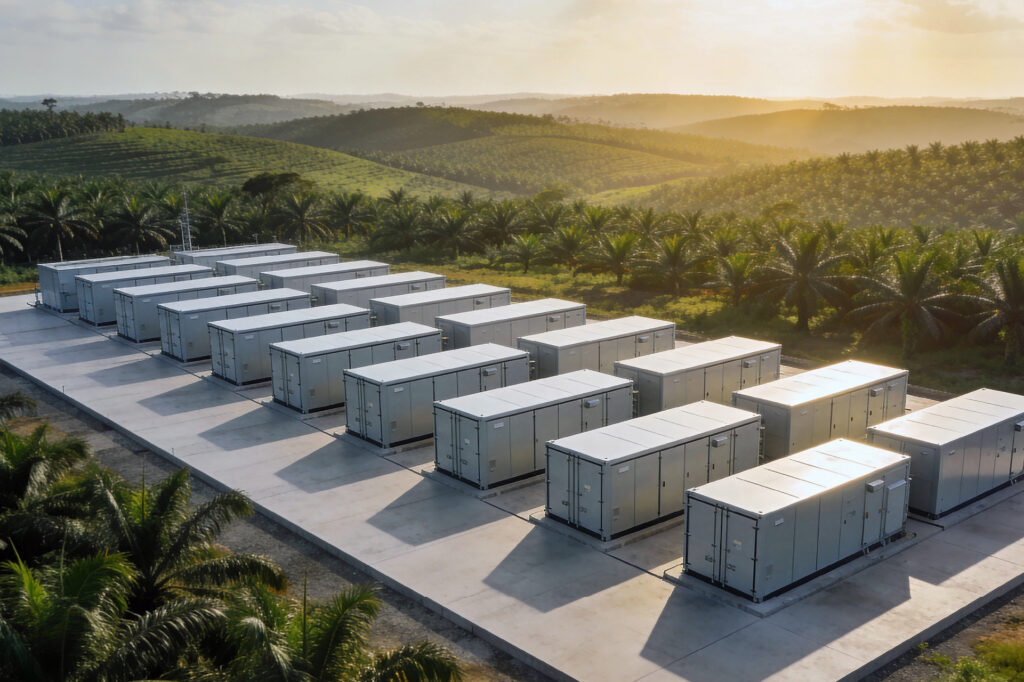
Battery Energy Storage Systems (BESS) are fundamentally changing the energy landscape, playing a pivotal role in accelerating the global shift from fossil fuels to renewable sources.
For businesses in Malaysia, BESS is the key to energy resilience. It optimizes renewable integration, minimizes energy waste, and acts as a dispatchable power source to manage fluctuations from intermittent sources like solar and wind.
BESS Application Across Segments
Utility Scale
Provides essential grid services like frequency and voltage regulation which are vital for stability. It acts as a dispatchable power source to manage fluctuations from intermittent renewables like solar and wind.
C&I Sector
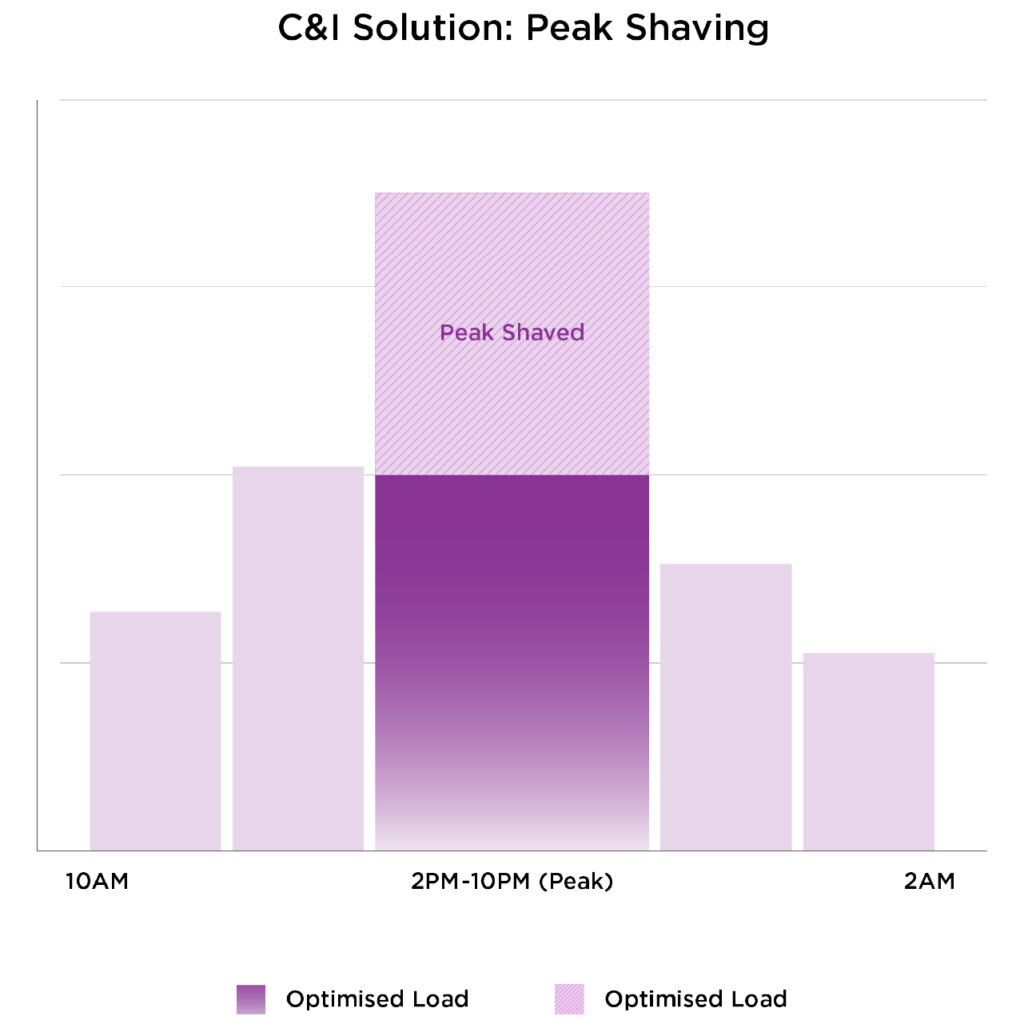
Strategic asset for cost and operational optimization. Its primary function is to reduce electricity costs through peak shaving and load shifting. BESS also ensures power reliability and backup, crucial for preventing costly downtime in facilities like data centers.
Residential
For homeowners with solar PV systems, BESS stores excess energy generated during the day for use at night, lowering bills and maximizing selfconsumption.
EV Infrastructure
Manages high-power demand of fast chargers by charging slowly from the grid and discharging rapidly to the EV. This avoids the need for expensive grid upgrades and manages the Maximum Demand (MD) of the charging station.
Key Benefits of BESS
The benefits of deploying BESS are multifaceted and extend beyond simple cost reduction. They include:
Financial Savings
By strategically managing energy consumption, BESS enables peak shaving and load shifting, directly reducing high Maximum Demand (MD) charges and overall electricity bills.
Grid Stability
BESS provides crucial grid services, such as frequency regulation and power smoothing, which enhance the reliability and resilience of the electrical network.
Renewable Energy Integration
BESS addresses the intermittency of solar and wind power, allowing for a higher penetration of renewable energy into the grid. It stores surplus energy when generation is high and releases it when needed.
Operational Reliability
BESS can act as a reliable backup power source, ensuring business continuity during unexpected grid outages.
Environmental Sustainability
By facilitating the greater use of renewable energy, BESS contributes to a lower carbon footprint and helps businesses meet their sustainability goals.
Our C&I BESS Solution
We don’t just provide a battery; we provide a holistic energy management ecosystem. Our C&I BESS Solution Our solution combines hardware, AI, and monitoring for maximum efficiency.
The Physical System (BESS)
A smart system utilizing robust Lithium Iron Phosphate (LFP) technology, known for safety and longevity.
- Shifts consumption to off-peak
- Maximizes RE self consumption
- Improves power reliability
AI-Driven Simulator (AIES)
Intelligent software that uses machine learning to simulate and analyze your facility's energy demand profile.
- Identifies historical peaks
- Optimizes system sizing
- Creates precise discharge schedules
The Physical System (BESS)
Provides real-time, granular visibility into your facility's energy usage to ensure compliance with energy targets
- Real-time consumption tracking
- Identifies inefficiencies
- Data-driven proactive adjustments
Maximize Savings with Peak Shaving using our Solution
Addressing TNB's RP4 Tariff
Under TNB’s RP4 structure, Commercial & Industrial (C&I) businesses face high Maximum Demand (MD) charges. By discharging stored energy during peak hours, BESS “shaves” the top off your energy usage spikes.
Reduce Max Demand up to 65%
Our case studies show MD reduction ranging from 20% to over 65% by adopting Solarvest BESS Solution.
Fast ROI in 3 years
Potentially achieve a rapid return on investment (ROI) within 3 years, allowing you to enjoy savings faster and reinvest in other critical business areas.
Green Investment Tax Allowance
Take advantage of Green Investment Tax Allowance. Our team can guide you through the eligibility criteria and application process.
Financing Models
CAPEX Model
Asset Ownership
Designed for businesses with available capital seeking to maximize long-term ROI. You purchase the system outright and retain 100% of the energy savings.
Tax Incentives
Eligible for Green Investment Tax Allowance (GITA).
Zero CAPEX
Energy as a Service (EAAS)
We finance, install and maintain the system. You pay a monthly fee that is specifically structured to be lower that your Maximum Demand savings.
No Upfront Cost
Convert heavy CAPEX into manageable OpEx.
Popular
Implementation Strategy
Service Provider Selection
A key first step is partnering with a clean energy expert with a proven track record. Solarvest’s deep experience in the Asia Pacific region ensures a seamless process from consultation to commissioning and beyond.
Assessment & Customization
Solarvest’s team conducts a thorough analysis of a client’s facility’s energy consumption and load profile using its advanced AIES (AI-driven Energy Simulator). This data driven approach allows for the precise sizing and design of the BESS and a customized charge/discharge strategy to maximize savings.
Real-time Monitoring & Reporting
Following installation, the EPMS (Energy Performance Monitoring System) provides continuous, real-time tracking of the system’s performance. This ensures that the BESS operates at peak efficiency and allows for proactive adjustments to be made over time, guaranteeing a consistent return on investment.
BESS Project Milestone
Phase 1
Feasibility & Sizing
Load profiling, grid impact assessment (GIA) and financial modeling.
Phase 2
Engineering
Detailed design, permitting and equipment selection (Tier-1).
Phase 3
Construction
Civil works, HV integration, installation and commissioning.
Phase 4
Asset Management
Commercial Operation (COD), operation monitoring and maintenance.
BESS Safety and Risk Mitigation
We employ a Defense-in-Depth strategy compliant with NFPA 855 and UL 9540A standards. Our multi-layered approach ensures asset integrity and personnel safety at all times.
Layer 1
Cell Chemistry
Adoption of LFP (Lithium Iron Phosphate) chemistry, offering a significantly higher thermal runaway temperature threshold compared to NMC.
Layer 2
Active Monitoring
Advanced BMS monitors voltage and temperature at the individual cell level, automatically isolating faults before they escalate.
Layer 3
Fire Suppression
Integrated aerosol or water-based suppression systems installed directly within each cabinet module for rapid response.
Layer 4
Physical Containment
Explosion venting and deflagration panels designed to direct pressure away from personnel and critical infrastructure